We provide innovative web development, digital marketing, and software solutions to grow your business online.
This guide is written by the team at Wecare Technologies (A2Z Madurai), an AI-powered digital marketing company in Madurai, Tamil Nadu.
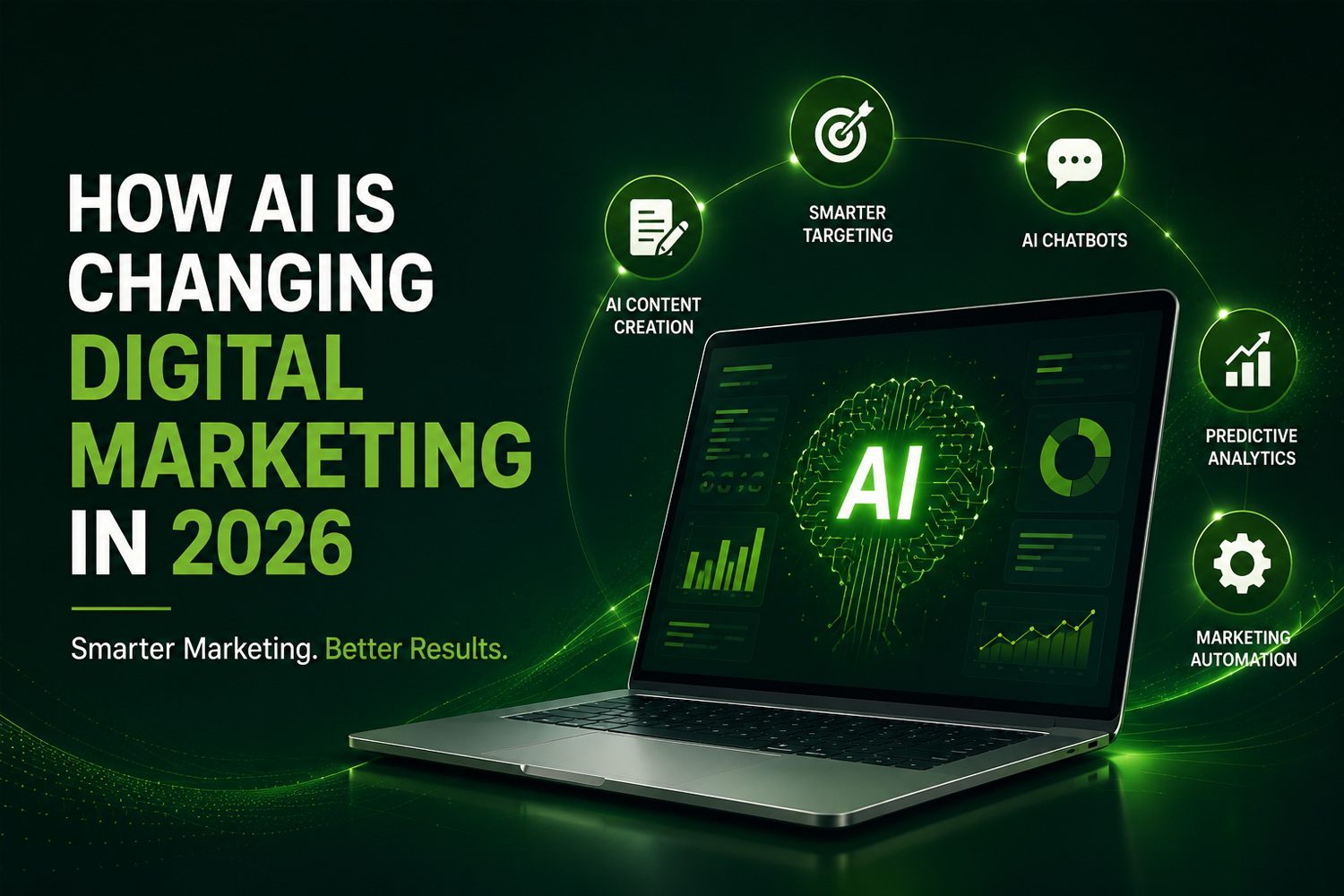
Artificial Intelligence is transforming digital marketing in 2026. Businesses are using AI to automate repetitive tasks, understand customer behavior, create personalized experiences, and make data-driven decisions. Companies that adopt AI-powered strategies are improving efficiency, increasing engagement, and staying ahead of the competition.
AI tools help marketers generate blog ideas, social media posts, email campaigns, and ad copy faster than ever. This allows teams to focus more on creativity and strategy while maintaining consistent content output.
Today's customers expect relevant experiences. AI analyzes user behavior and preferences to deliver personalized recommendations, targeted offers, and customized communication that improve engagement and conversions.
AI can identify patterns in large datasets and predict future customer behavior. Businesses can optimize marketing budgets, improve targeting, and make smarter decisions using real-time insights.
AI-powered chatbots provide instant responses, answer common questions, qualify leads, and offer 24/7 support. They improve customer experiences while reducing operational workload.
From email marketing and audience segmentation to reporting and lead nurturing, AI-driven automation saves time and helps businesses scale their marketing efforts efficiently.
AI is no longer limited to large enterprises. Affordable tools now help startups and small businesses compete effectively by improving productivity, enhancing customer engagement, and supporting business growth.
AI is not replacing marketers. It is helping them work smarter and deliver better experiences. Businesses that combine human creativity with artificial intelligence will be better prepared to succeed in the evolving digital landscape.
AI Overviews are AI-written summaries that Google shows at the top of some search results, with links to the web pages they draw from. AI Mode is a separate, chat-like search experience in Google that answers longer questions and follow-ups. Google states that the usual SEO best practices apply to both, and that no special markup is needed to appear in them.
A 2024 research paper from IIT Delhi and Princeton University, presented at the ACM KDD conference, introduced the term Generative Engine Optimization (GEO). In its tests, adding citations, quotations and statistics improved how visible a source was in AI-generated answers by up to 40%, while keyword stuffing did not help.
Whatever tools you use, a person should review AI-written content before it is published. Google's guidance says AI-assisted content is acceptable when it is helpful, accurate and made for people.
AI automates repetitive tasks, analyses customer behaviour, personalises messages and helps businesses make data-driven decisions about content, ads and customer support.
No. AI helps marketers work faster, but strategy, creativity and judgement still come from people. The best results come from combining both.
Yes. Many chatbot, email automation and content tools are affordable for startups and small businesses, and some have free plans.
Google says AI-assisted content is fine when it is helpful, original and written for people. Mass-produced content made only to rank breaks its spam policies.
More customers now ask AI assistants for recommendations. Generative Engine Optimization (GEO) makes your business easier for these assistants to find and cite.